HONG KONG • FINANCIAL RISK & AI

Winston
Bartle.

Senior Consultant at EY. I build behavioural models for interest-rate risk in the banking book, on deposits and financing.

Winston Bartle
MCKL
CIE A-Levels

Further Mathematics, Mathematics, Physics, and Chemistry.

University of Amsterdam
BSc Econometrics & Data Science

Set out for mechanical engineering, then turned to econometrics.

HKUST
MSc Financial Technology

Machine learning applied to financial forecasting.

Internship
Tencent WeChat Pay

NFT study for the Hong Kong e-wallet.

About

Background

I'm a Senior Consultant in Financial Risk Management at Ernst & Young in Hong Kong. I build behavioural models for interest-rate risk in the banking book: how non-maturity deposits, term deposits, and financing respond when rates move, for banks in Hong Kong and Malaysia.

I grew up in Malaysia and started toward mechanical engineering before turning to econometrics. That path ran through a BSc in Econometrics and Data Science at the University of Amsterdam and an MSc in Financial Technology at HKUST, and then to EY.

Outside of work I follow commercial aviation — airliners, airport operations, and the way flight networks fit together. It keeps reminding me how much of a large system depends on precision.

Based in Hong Kong SAR
Focus: Behavioral Modeling • AI in Risk • IRRBB
Experience

Selected Work

Senior roles in financial risk, model validation, and AI-driven solutions at leading institutions.

Senior Consultant — Financial Risk Management
Ernst & Young (EY)•Hong Kong SAR
Sep 2025 — Present
  • • Developed IRRBB and RORBB behavioural models for a major Malaysian bank’s non-maturity deposits, term deposits, and financing portfolios, covering conventional and Islamic books, in preparation for Bank Negara Malaysia’s requirements expected to take effect over 2027–2028.
  • • Built an AWS data foundation with PySpark and Polars on Glue and Iceberg, turning multi-year portfolio snapshots into segmented retail and SME histories for deposit stability, runoff, and financing behaviour.
  • • Estimated non-maturity deposit pass-through, stable balances, and runoff; term-deposit runoff, rollover, and weighted average life; and financing behaviour, to support earnings and economic-value measurement under the coming BNM framework.
  • • Carried out implementation of OTC derivatives reporting for multiple banks; designed Python GUI and Alteryx workflows to map trade data from source systems to HKTR-mandated ISO 20022 XML schema, enabling compliance ahead of regulatory deadline.
  • • Conducted E2E independent validation of a bank’s IRRBB NMD behavioural models, including model design and assumption review, full replication, and quantitative back-testing (t-test, R², hit-rate).
  • • Performed HKFRS 9 ECL model review for multiple Hong Kong banks and entities, evaluating PD, LGD, EAD, staging logic, forward-looking scenarios, management overlays, and performance monitoring for year-end reporting.
  • • Developed model monitoring framework for a bank’s IRRBB TD & Loan portfolios, establishing performance thresholds to support behavioural validation
AWSMachine LearningRisk ModellingModel ValidationModel MonitoringPython
Consultant — Financial Risk Management
Ernst & Young (EY)•Hong Kong SAR
Sep 2023 — Sep 2025
  • • Implemented RAG using LlamaIndex, integrating BM25 retrievers and Cohere reranking to improve text retrieval and LLM performance.
  • • Developed Python-based behavioral models for early uplift and early prepayment in retail term deposits and loans for a major Hong Kong bank.
  • • Conducted advanced modeling research on retail term deposits, focusing on early redemption risks and rollover probabilities; applied techniques such as Random Survival Forest and Random Competing Risk Forest to improve predictive accuracy.
  • • Built a comprehensive Python tool for IRRBB and NII/EVE calculations, covering diverse products including loans, bonds, term deposits, non-maturity deposits, money market instruments, repos, and credit cards.
  • • Supported the review and validation of HKFRS 9 impairment ECL models for one of Hong Kong’s largest virtual banks, assessing model assumptions, design, SICR, PD and ECL calculations for appropriateness and accuracy.
Machine LearningRisk ModellingPythonAlteryxAI
Tencent WeChat Pay HK
Business Analyst Apprentice
Tencent WeChat Pay HK•Hong Kong SAR
Nov 2022 — Mar 2023
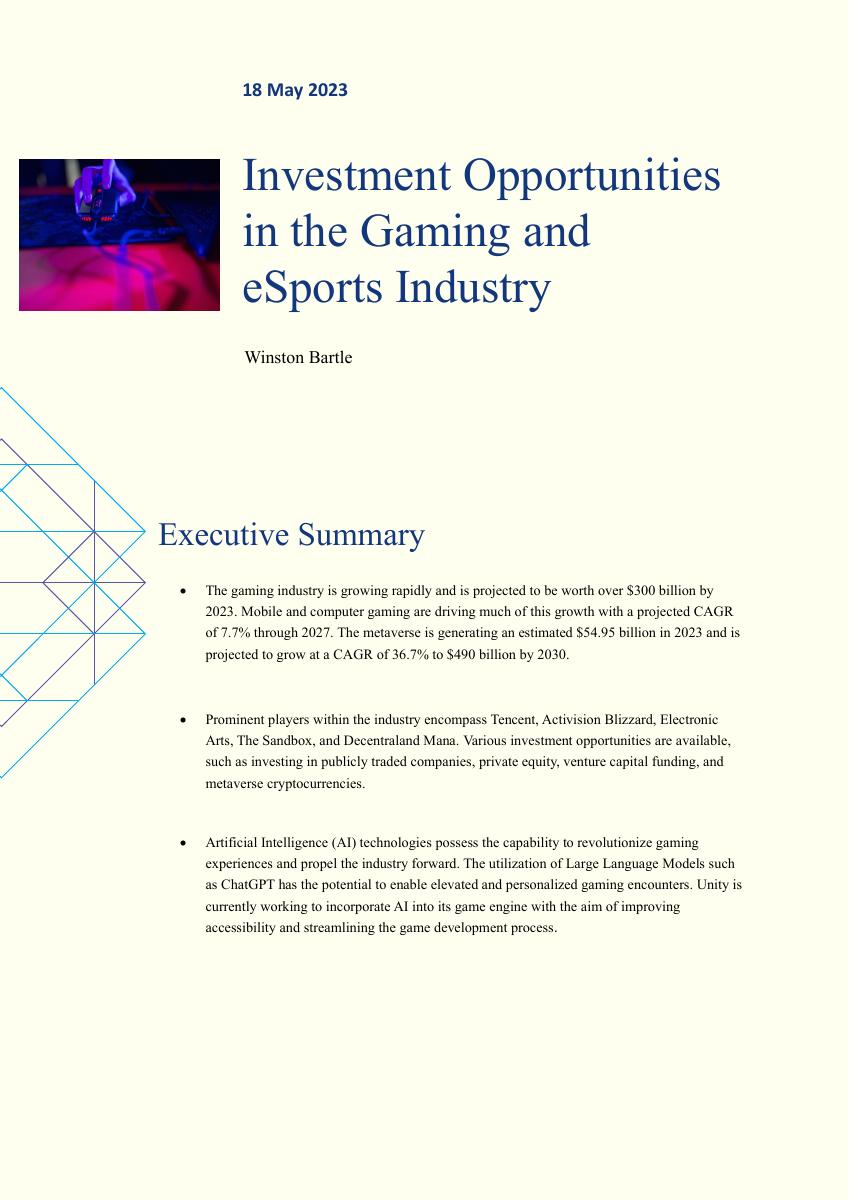
  • • Analyzed NFT use cases for integration into Tencent WeChat Pay HK e-wallets.
  • • Identified key user pain points in existing Hong Kong NFT platforms and proposed solutions to WeChat Pay HK, including a secure custody service to address ownership security concerns.
  • • Estimated the potential market size for NFT custody solutions in Hong Kong at approximately HKD 3.14 million, highlighting viable growth opportunities.
  • • Reviewed the SFC’s regulatory framework for NFTs to ensure full awareness of compliance requirements.
NFT ResearchDigital AssetsHK RegulationsProduct StrategyStakeholder Presentations
Education

Academic Path

Hong Kong University of Science & Technology
2022 — 2023
MSc in Financial Technology
Hong Kong University of Science & Technology

Specialised in advanced machine learning and application to various domains such as financial forecasting. Covering all topics such as deep learning, graph neural networks, algorithmic trading, blockchain.

Graph Neural NetworksAlgorithmic TradingBlockchainFinancial ModellingAI
University of Amsterdam
2019 — 2022
BSc in Econometrics & Data Science
University of Amsterdam

Rigorous quantitative training combining econometrics, causal inference, time-series analysis, and modern data science methods

EconometricsTime-Series AnalysisPythonRMathematical FinanceStatistical LearningLife Insurance
University of Groningen
2018 — 2019
BSc in Artificial Intelligence
University of Groningen

Foundational AI curriculum covering symbolic AI, Logic, Algorithms and Data Structures, Programing in C

CAlgorithm and Data StructuresResearchLogics
Methodist College Kuala Lumpur
2017 — 2018
Cambridge CIE A-Levels
Methodist College Kuala Lumpur

Achieved straight A* in Further Mathematics, Mathematics, Physics, and Chemistry. Initially focused on mechanical engineering but developed a strong passion for data science and AI, leading to a pivot in academic focus.

Further MathematicsMathematicsPhysicsChemistry
Expertise

Skills

Languages

🐍Python
90
📊R
92
🔁Alteryx
91
📄LaTeX
92

AI / Machine Learning

🔥PyTorch / TensorFlow
88
🤖scikit-learn
95
⚡PySpark / Polars
88
🌲Random Forest / Logistic Regression
92
📈ARDL / ARIMAX
90
🔍SHAP / Explainability
88
🧠Neural Networks
88

Finance & Risk

🏦IRRBB Modelling Development
95
✅IRRBB Model Validation
95
💳Credit Risk Model Validation
90
🧱Data Transformation and Data Architect
95
⚙️Financial Reporting Tool Automation Tool
95

Tools & Platforms

🐙Git / GitHub
90
📓Jupyter / Notebooks
95
🔌API
88
☁️AWS
85
🎨Stable Diffusion
80
Apps

Things I built

Small tools I actually use. More will land here as I ship them.

Live2026

Glance

Paste a URL or a whole message. I read the address in your browser — lookalike names, hidden destinations, and how new the domain is. Nothing is sent to this site, so it doesn’t spend the Vercel allowance. HTTPS only means the connection is encrypted.

LinksScamsPrivacy
Live2026

Easy eSIM Installer

Drop a QR screenshot, paste the LPA string, or type the SM-DP+ fields. I build a link you open on the phone that needs the plan — iPhone or Android does the rest. Nothing is uploaded.

eSIMTraveliOSAndroid
Live2026

Slip

A public tester of a shared clipboard. This copy asks you to press Pull, so an open tab does not spend the Vercel allowance. The GitHub project still checks for new slips every 1.5 seconds. Email me for a trial code.

ClipboardPrivacyMacWindows
Live2026

Hamster City Airport

Terminals, aircraft, ground vehicles and trains, running in your browser. Opening it downloads the scene — about 10 MB, and more if you fly over to the circuit. Nothing is sent to this site, so it doesn’t spend the Vercel allowance.

3DSimulationAirport
Writing

Recent Posts

All 12 posts
Machine LearningStatistics

ROC AUC Has Two Definitions — They're Not a Coincidence

The pairwise interpretation of ROC AUC — 'probability a random positive outranks a random negative' — isn't just a nice intuition pump that happens to give the same number as the curve. It's mathematically the same computation. Here's why, worked through an 8-point example both ways.

August 19, 2026
9 min read
Logistic RegressionClass Imbalance

Logistic Regression's Blind Spot: Class Imbalance and the Intercept Correction Nobody Teaches

Fraud, default, churn, cancer — the outcome you actually care about is almost always the rare one. SMOTE and class weights fix the training problem, but they quietly break your predicted probabilities unless you correct the intercept back afterward. Here's the fix, from King & Zeng (2001).

July 27, 2026
9 min read
StatisticsEffect Size

Cohen's h: When 'Statistically Significant' Doesn't Mean 'Material'

Wilson confidence intervals are a great governance tool for monitoring behavioural assumptions — but at large sample sizes they get so tight that trivial, immaterial drift starts failing the check. Cohen's h fixes that by measuring the size of the gap, not just whether it's detectable.

July 2, 2026
5 min read
StatisticsOptimization

BFGS, L-BFGS, Nelder-Mead, Powell, Basin-Hopping: Picking an Optimizer for Maximum Likelihood

Fitting a model by maximum likelihood almost always means calling scipy.optimize under the hood. BFGS, L-BFGS-B, Nelder-Mead, Powell, and basin-hopping all claim to find 'the' maximum likelihood estimate — but they make very different assumptions, and picking the wrong one silently hands you a local optimum instead of the answer you wanted.

July 2, 2026
8 min read
AlgorithmsGraph Theory

Greedy by Design: Dijkstra's Algorithm and the Shortest Path Problem

In 1956, Edsger Dijkstra designed an algorithm in his head, in 20 minutes, without pen or paper. It still powers Google Maps, internet routing, and game AI today. A complete guide to the mechanics, intuition, and limitations of one of computing's most elegant ideas.

June 7, 2026
13 min read
IRRBBALM

Monitoring Static Behavioural Assumptions Without Pretending They’re Models

Static behavioural assumptions power ALM and IRRBB models, but they drift. Wilson score intervals give you a statistically sound, auditable way to monitor when they need recalibration — without building a full dynamic model.

June 2, 2026
6 min read
IRRBBRisk Modelling

IRRBB Pass-Through Rates: The Hidden Metric Behind Margin Forecasts

When market rates move, customer rates rarely follow one-for-one. Pass-through rates explain the gap, the timing, and the IRRBB risk hiding inside margin forecasts.

May 23, 2026
4 min read
PolarsPySpark

Polars LazyFrame and PySpark: The Syntax Cheatsheet

A beginner-to-fluent guide to Polars LazyFrame and PySpark. Same verbs, two spellings: filters, columns, joins, windows, strings, dates, and the null traps that actually change results.

April 22, 2026
20 min read
PolarsPyIceberg

Pandas is Outdated in 2026: Why Polars + PyIceberg Wins for Iceberg Lakehouses

After years of being the default, Pandas is hitting its limits on modern data lakehouse workloads. Here's why I switched to Polars + PyIceberg — and why you might want to as well.

March 31, 2026
4 min read
Contact

Let’s talk

I’m always open to discussing interesting AI & finance problems, consulting engagements, research collaborations, or just connecting with fellow fintech enthusiasts.

Drop me a message and I’ll get back to you within 48 hours.

Hong Kong SAR